
What Is Show Calling—and Why Does It Matter?
Show calling is the disciplined coordination of live cues across stage, audio, lighting, video and content. Here is how it works.
Reviewed by Upshot Concept · Last updated 26 July 2026
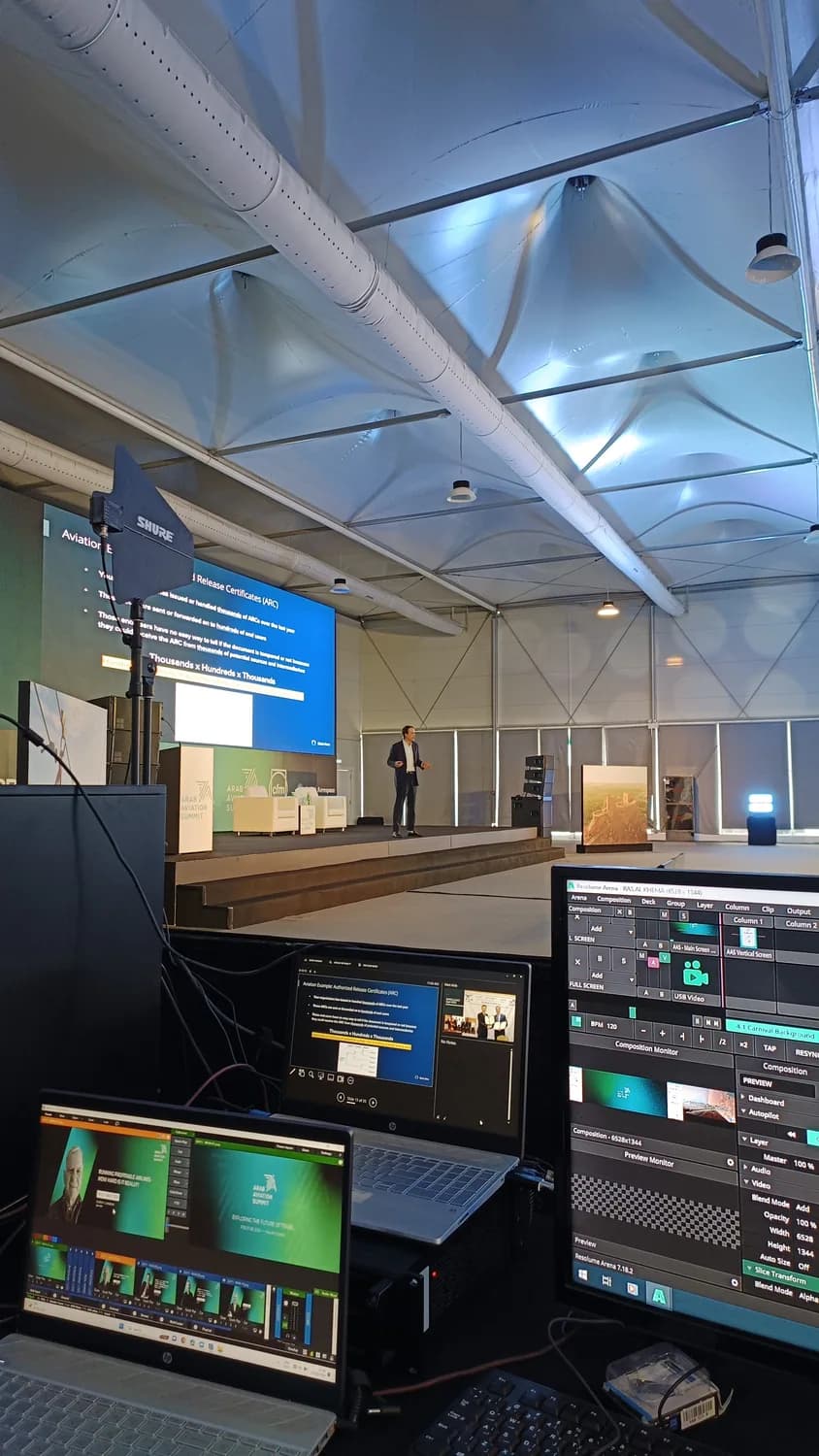
Show calling in one sentence
Show calling is the real-time coordination of the people and systems responsible for each live moment. The show caller uses the approved run of show to prepare and issue clear cues to stage, audio, lighting, video, playback and other departments.
It matters because live events are interdependent. A presenter entrance may require music, lighting, screen content and a microphone to change in a particular order. Without one coordinating voice, each operator is left to interpret timing independently.
What happens before show day
Good show calling begins during planning. The caller reviews the programme, identifies cue points, clarifies who has authority to change content and makes sure every department understands the same sequence.
The run of show is then developed into a usable live document. It should include timings, actions, cues, owners and notes that matter to the room—not every planning detail accumulated during the project.
How cues are communicated
A cue should be concise and predictable. Operators are usually warned that an action is approaching, then given a clear instruction at the required moment. The exact language can vary, but the team should agree it during rehearsal.
Reliable communications are essential. The caller needs to know whether an operator heard the cue, whether an action completed and whether a problem changes the next decision.
The relationship with stage management
The show caller manages the sequence across departments. Stage management handles people and physical movement around the stage, green room and presentation area. On smaller events one person may cover both functions, but the responsibilities should still be explicit.
A stage manager can confirm that a presenter is ready; the show caller can then coordinate the screen, lighting, audio and walk-on cue. That exchange prevents the technical team acting on assumptions.
Why rehearsal changes the outcome
Rehearsal exposes unclear transitions, unrealistic timings and missing dependencies while there is still time to fix them. It also lets presenters understand the room and gives operators a shared memory of the sequence.
Show calling does not remove every surprise. It creates a controlled way to respond: one escalation route, one current sequence and one person coordinating what happens next.